Built on the culture of PLUR: peace, love, unity, and respect, the only requirement for entry to raves was yourself and love for the music.by Stylish Sinner
For Red*, the rave is the only place she is truly real. In the baptism of light and sound, she is born again. The constant surveillance that comes with being a trans woman in Nigeria falls away, and for a few hours, she becomes someone unafraid to openly exist. "I don't think I can explain it, but on those dancefloors I feel like I can drop the weight of the world. I can just be my whole self, and I don't have to explain," she says. "At least it used to feel like that. These days, things are changing."
Invisibility is hard to maintain once a thing becomes desirable, and raving in Lagos has become the new it-thing.
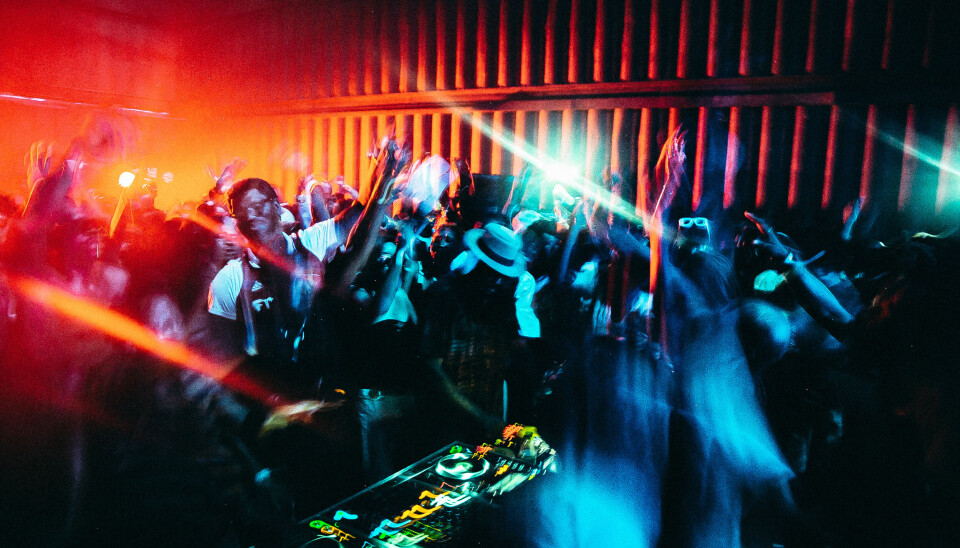
The Lagos rave scene grew, as most countercultural spaces do, in resistance. Beginning as intimate gatherings, location details shared through private group chats, crowds small enough that everyone knew someone who knew someone, it was built deliberately apart from mainstream nightlife. Lagos club culture has long run on performance: exorbitant bottle prices, tiered seating systems, VVIP, VIP, a night out that is less about dancing and more about being seen spending. The rave rejected it all, staying underground. Built on the culture of PLUR: peace, love, unity, and respect, the only requirement for entry was yourself and love for the music.
It follows that this countercultural space of inclusivity in a country that polices and criminalizes queer expression would become home to those who exist on the fringes of mainstream society and at-risk communities like those of the LGBTQ.
The guiding ethos and the communal culture of raves risk being gentrified.by Stylish Sinner
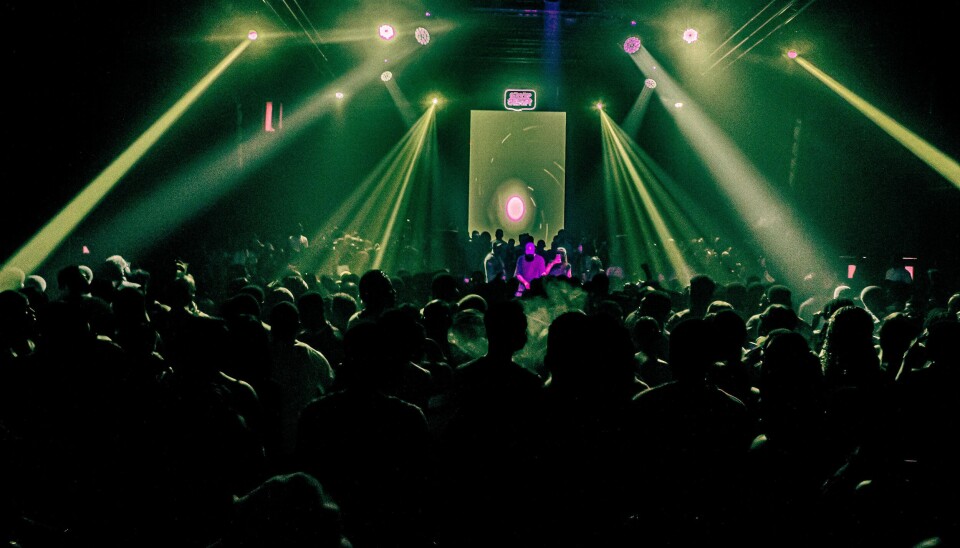
Nigerian house music is having a genuine, undeniable moment. The scene's architects are increasingly ambitious about where it could go. "We can provide globalized experiences like you can get in London or South Africa," says Proton, a DJ and rave organizer. The events have scaled to match that ambition. What was once a DJ deck in the middle of a room is now a production: professional lighting, brand installations, lineups engineered to draw numbers.
In the beginning, there were only a handful of raves, with irregular programming. Now, there are dance music parties every weekend, with popular raves like Group Therapy and Element House repeatedly selling out large venues like Livespot, Landmark event center. The scene has arrived.
With growth has come sponsorship. Brands, like Spotify, have begun to tap into the cultural currency of the scene. For organizers, this can mean better equipment, more secure venues, and the ability to scale beyond what was once possible. The transaction, however, is not neutral. The guiding ethos and the communal culture of raves risk being gentrified.
"While sponsorship is not bad, you have to keep in mind that brands want their visibility; they are trying to get to an audience, even at the risk of your creative direction," says Ejiro Otiotio, better known as Sons of Ubuntu, a DJ and organiser that has been part of building the scene from its earlier days. "We’ve seen people give into the allure of money and lose their creative direction."
As raves gain popularity, the anonymity that once made it a refuge has eroded.by Stylish Sinner
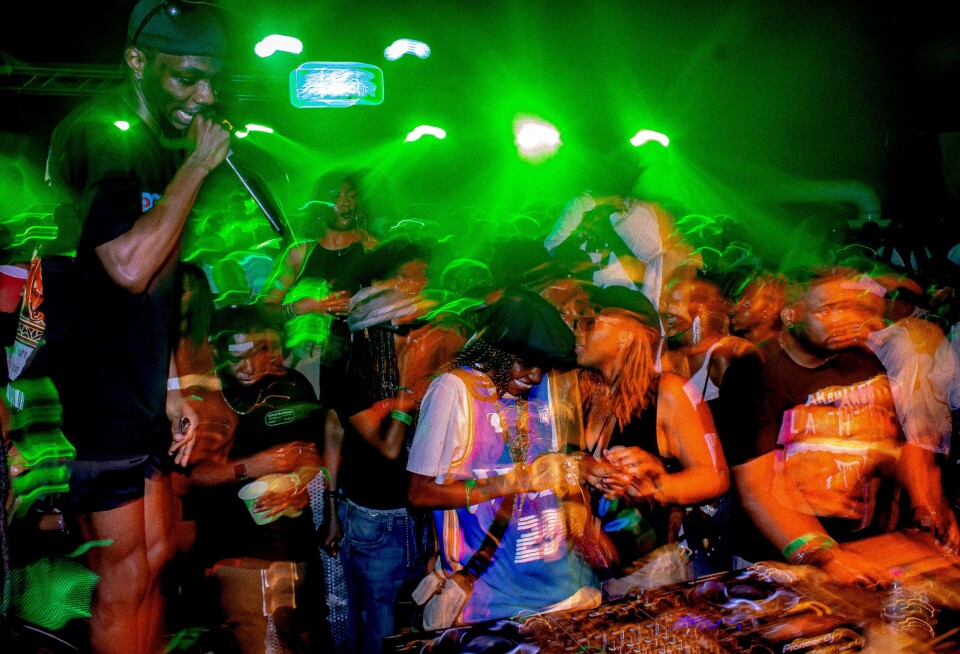
The original social contract of the Lagos rave was collectively maintained and built on a shared understanding of rave culture: here, everyone, regardless of their inclinations, background, or culture, is welcome. That contract is now under pressure from those who never signed it.
“Many people are just aura farming. They don’t have a real understanding of what raves stand for. People want a way to signal cool, both promoters and attendees." Sons of Ubuntu tells OkayAfrica. "We need to ask what the core characteristics are, the guiding ethos that has kept the scene alive globally, otherwise we risk becoming a different version of the mainstream parties. Rave was built on PLUR; you won’t hear that at clubs. It’s not just about the music; we have to keep the safety and community.”
As raves gain popularity, the anonymity that once made it a refuge has eroded. With every new face that arrived because the culture had become the new cool thing to be near, the threat of loss of safety and invisibility that the scene once boasted of grows.
For queer attendees, the risk is felt more deeply. "Raves used to be a place I went to release my inhibitions," says Dada*. “Now I find myself subconsciously being self-conscious, policing my expression.”
Soma* raves differently now; she is reading faces, reading intentions. “I have started mounting my guard at raves,” she says. “When I first attended, I felt like we were all connected to the music; now I'm too busy scanning the room to connect like that.”
“People didn’t use to post about raves socially.” Bishop Ebuka Duke, or Stylish Sinner, a photographer, organizer, and raver since 2017, tells OkayAfrica. “It’s not that I blame ravers for posting, it’s just not realistic to post about things and expect others not to come. To accommodate the larger crowds, we’ve built a structure. And when you’ve built some structure, money will come. With money will also come gentrification.”
The tension is multilayered. What was once countercultural now generates social capital and with it, a crowd that can be packaged and sold to, a commercial wet dream. The costs of staying underground are steep. Turning down sponsorship deals, keeping audiences intimate, protecting the sanctity of the experience, all of it comes at a price that is increasingly harder to absorb against the weight of Nigeria's economic pressures. There is no clean resolution.
"Omo the financial cost is a lot," Abiodun Oladokun, a DJ and rave organizer, says plainly. "I use my salary to pay for my parties."
“I recently threw a party, 20-30 people, that cost around 300-500 thousand naira to produce. If I charge people 50 thousand to come in, they will want value for top dollar, maybe even bottle service, that’s not what we want.” Sons of Ubuntu tells me.
Not everyone reads the moment as a crisis. For Proton, evolution is not only inevitable but welcome. "Dance music is good, and since it's good, people will share it, and it will grow. The growth is not a bad thing; it just means we can continue to provide global experiences at sustainable pricing."
Oladokun projects the industry will blow as big as Afrobeats within the decade, and with that scale will come differentiation. The mainstream parties will go one way; the more committed, experimental collectives will dig deeper underground, protecting the niche by ceding the center. "I think the scene's culture will survive," he says. "There will be those that are more mainstream, and there'll be those that will dig their roots deeper underground and provide more niche, experimental experiences."
Duke agrees with this. He believes that the collapse of the scene as it was is part of the natural cycle for all countercultures as they grow. However, he believes that this collapse is necessary for the rebirth of the true underground. “Ravers need to realize that things are allowed to outgrow them. Instead of worrying about mainstream raves, take responsibility and keep your spaces safe. Nurture the raves that are staying underground; you might miss out on the flashy stuff, but that’s the cost. Put your energy where your interests are.”
In spite of Red’s understanding of the growth of the scene, she mourns the loss of its obscurity. “I miss the underground feeling. It’s a necessary space for me, I just want to have a night out with my friends and dance.”
Dance music in Lagos has crossed a threshold it cannot uncross. Where it lands from here is a matter of choice, for both organizers and ravers. Many of them are expensive: financial capital, social capital, the willingness of organizers and ravers alike to trade visibility for safety, scale for meaning. The scene will survive in some form. The question is who it survives for.