After a year off, the Kenyan singer-songwriter returns with her ‘Eternal’ EP, a quieter and more intentional sonic pivot built around what she actually wants to make.
Paula AdhisPaulaAdhisNairobi-Based East Africa Correspondent
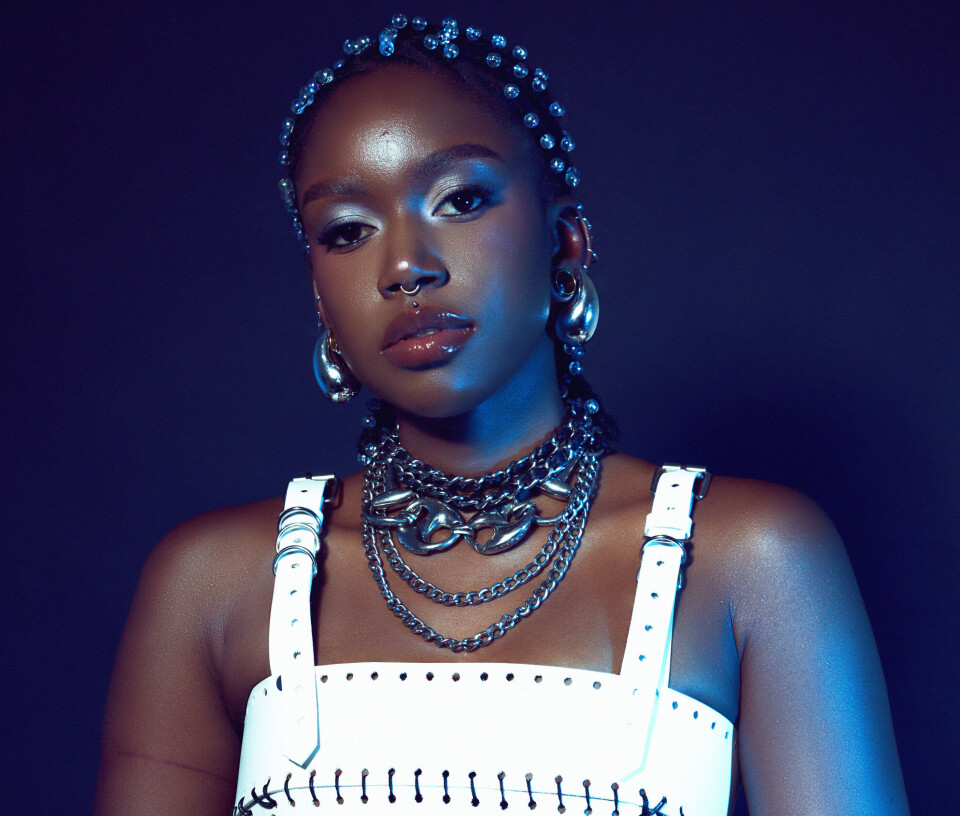
The Kenyan singer-songwriter Karun has a new EP, ‘Eternal,’ marking the start of a more intentional new chapter.courtesy of Karun
What does it take to start making music for yourself again?
That’s a dilemma Karungari Mungai — better known by her stage name Karun — has been grappling with in this season of her career. As a 16-year industry vet, the Nairobi-based singer-songwriter has been a rare, consistent presence in Kenya’s ever-changing music scene. Yet she is only 31. It started from her time with Camp Mulla, the alternative hip-hop group that broke out with 2010’s “Party Don’t Stop”, and tracks like “Addicted” that defined Nairobi-cool before the TikTok era. Then came her solo career, where she has steadily built a catalogue on her own terms.
Advertisement
Along the way, she’s stacked the kind of résumé that usually come with more “mainstream” expectations: a BET Awards nomination for Camp Mulla when she was still a teen, a Berklee College of Music education, a Forbes Africa 30 Under 30 nod, a performance on COLORS, and now membership as a Recording Academy (Grammy) voting member among many more accolades. She also showed a generation of Kenyans that they could make a living from music.
That kind of longevity and influence does something strange to the relationship between artist and audience. People don’t just follow Karun; they feel like they know her because they’ve been watching her grow up in real time. So, her releases often arrive wrapped in affection and instruction.
“Every time I release music, I get unsolicited comments about people telling me what I should do to get more popular,” she tells OkayAfrica. Karun is quick to acknowledge that such advice comes with the job, but she feels it hits harder for her because she started out in a hugely visible pop group. That early success still shapes what some listeners want from her now.
“So even when I release music that is so dear to my heart and is more reflective of me as an artist [today], they’re still like, ‘you should have done this. You should have, should have, should have, should have…’” She adds: “There’s always a ‘you’re so good but…’”
For Karun, that “but” is best described as a war between a public’s grab at nostalgia and the music she’s actually trying to make. So when she was finally ready to return after a year away and release her new EP, Eternal, she wanted to get ahead of the noise and draw the boundary herself.
As she dropped the first single, “Feel You,” she preceded it with a now-pinned statement on Instagram. It was a clear, loving disclaimer to listeners that she wasn’t interested in their opinions on how or what she should make. The post stood as a sage-clearing that she could point people to if they misunderstood the direction she’s taking.
“I wanted to clear the slate. I wanted to set the tone for this season,” she says. This time, she wanted people to understand the point from the jump: “I love you guys, and I’m not doing this for popularity.”
“I wanted to clear the slate. I wanted to set the tone for this season.”courtesy of Karun
Finding Freedom Outside the Metrics
The answer to how Karun got here came during the year she took off in 2025, when she focused on herself. Coming out of her last project, she was burnt out. After returning from Berklee, Karun got right to work on expanding the solo identity she first introduced on her 2014 debut album Sun & Moon. Over the next few years, that momentum turned into a steady run of projects, including Indigo, Catch a Vibe, Passenger 555, and À Nu. Along the way, songs like “Catch a Vibe,”“Here With Me”, “Glowup,” and “Pen and Paper” kept Karun top of mind, while collaborations on songs like Xenia Manasseh’s “Anticipate” kept her in rotation, even as the cycle of radio, festivals, and constant rollout pressure intensified.
“I was getting pretty burnt out… still loving the process, so happy that people are liking the music and grateful for the opportunities,” she says, “but I was getting tired.”
What she planned as six months away became a full year. In that quiet, the difference between the business of music and the art of making it came into focus. Karun realized how much of her life had shifted from creating to managing. “Most of my time was spent doing admin,” she says. “I’m a musician by profession. But did I feel like a musician in my day-to-day life? It didn’t feel like I was.”
The burnout even changed how she took in music. “I stopped listening to music for fun… because it just reminded [me of] work,” she admits. “But right now I’m back. Time off gave me so much time to fall in love with music again.”
Part of that calm also came from building leverage outside music. Karun says she has spent the last few years creating a life where music does not have to pay her bills, which has changed how she can now approach her art. She points to Embe Creatives, the family-run hub she built with her mother and sister, which repurposed her grandmother’s former fashion school into shared studios and workspaces for creatives. It also houses Embe Music Studio, an affordable recording space designed for independent musicians, with women’s safety and comfort in mind.
“I’ve set myself up in a way where those numbers don’t matter,” she says. She has built stability outside music, so streams and engagement no longer run the show. “I have a business. If the money doesn’t come from music, I’m good.”
That space to breathe brought a long-standing creative ache back into focus: the unreleased music she had been carrying for years. “I have all this music that I make for myself just sitting on a hard drive gathering dust,” she says, adding that over time it started to bother her. For Karun, unreleased music is unfinished business, and she had been sitting on a different kind of music for a long time. It was quieter, more spacious, and it did not fit neatly into the pop-facing world she had been living in.
The problem was timing. When she was tied to rollouts, teams, and partners that needed her to stay on course, there was no clean place to put a left turn like this.
It is here that Eternal, the new EP, begins. Recorded in Lagos in 2022 with Nigerian producer Bigfootinyourface, the four-track project was the first offering of this new era from Karun. The first single, “Feel You,” is built on restraint. It is simply Karun’s voice and a synth, later expanded with strings and swells. The rest of the project carries a similar energy of “presence” and “stillness.”A highlight is “Hold Me,” featuring South Africa’s Nana Atta, a collaboration that deepens the EP's intimacy and atmosphere.
Eternal is also a bridge to what comes next. Karun says a full-length album is coming later this year, and it is fully self-produced. For her, that is a key point of this era. “My whole career, I have been a producer, like since [the] Camp Mulla times,” she says, but she has never released a song she produced. “So when people ask, ‘who are you?' and I’m like, ‘I’m a singer, songwriter, producer,’ I feel like a fraud.”
Diving into her production bag also fits her new definition of thriving in music. By diversifying her income, she has freed herself of the shackles of keeping up with streams and metrics. She can prioritize what she actually wants, even if it is not the most popular option.
“If you turn this into a business, then the music doesn't come first, the entertainment does,” she says. “So now you have to ask: ‘What kind of an artist are you?’”