Emily Chepkor has stepped into a new role with We Run Nairobi.courtesy of Emily Chepkor
Emily Chepkor didn’t plan to help start a movement. Three years ago, she simply put out a call for runners in Nairobi to join her for a free Saturday morning run. Just her and three other women showed up. They jogged a six-kilometer loop, ended with coffee at a café, and unknowingly sparked something much bigger.
That casual meet-up became We Run Nairobi, now the biggest and most visible running club in the city, and a key driver of the running boom sweeping through Nairobi’s streets. On their best day, they have pulled over 1200 runners. She has worked with Swiss running brand On and skincare giant Nivea. What began as a small gathering has grown into a citywide community built on ease, inclusion, and the simple joy of movement.
But long before the club took off, Chepkor’s own running journey began in 2015. And since then, she’s completed 11 marathons.
“Running long like that, and it being a war of attrition, is something that has always appealed to me and my character,” she says. “Therefore, it’s just a distance I’ve always done.”
Chepkor speaks to OkayAfrica about building a community from scratch, her running superstitions, and what it means to make space for everyone—from seasoned marathoners to first-time walkers—in Nairobi’s growing running scene.
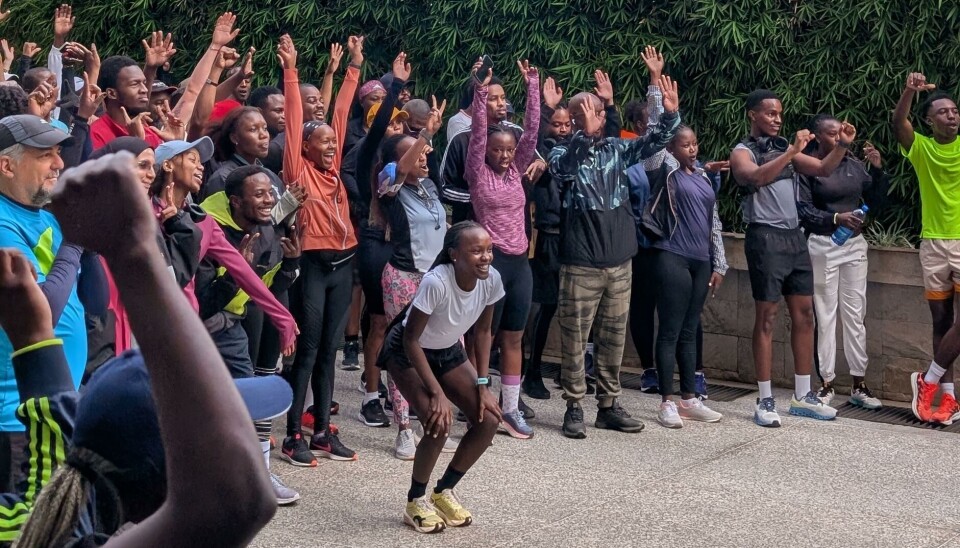
We Run Nairobi members pose and cheer for a photo before setting off on their weekend run.courtesy of Emily Chepkor
Emily Chepkor: I started running about ten years ago. My boyfriend at the time was training for an Ironman Triathlon, and his entire life revolved around training. We had just started dating, and the only way to spend time together was to join him somehow. I wasn’t a strong swimmer, and I’d only learned to ride a bike as an adult. So I tried running.
A few weeks in, we signed up for a half-marathon. For a beginner, I did surprisingly well. Like many first-timers, I crossed the finish line thinking, “Never again.” But two days later, I found myself asking, “What’s next? How can I improve?”
The distance is always hard. Absolutely, at no point is 42km easy! But running long like that, and it being a war of attrition, is something that has always appealed to me and my character. Therefore, it’s just a distance I’ve always done.
I lived abroad for a while. Whenever I moved to a new city, the first thing I did was look up running clubs. Running became a soft introduction to each place. You find a route, tap into the local community, and start exploring from there.
Three years ago, I ran my tenth marathon in Boston. The Boston Marathon is one of the toughest to qualify for. When I finally did, I thought, ‘That’s it. I’m done.’ But running had been in my life for so long, I couldn't just walk away. I wanted to give back.
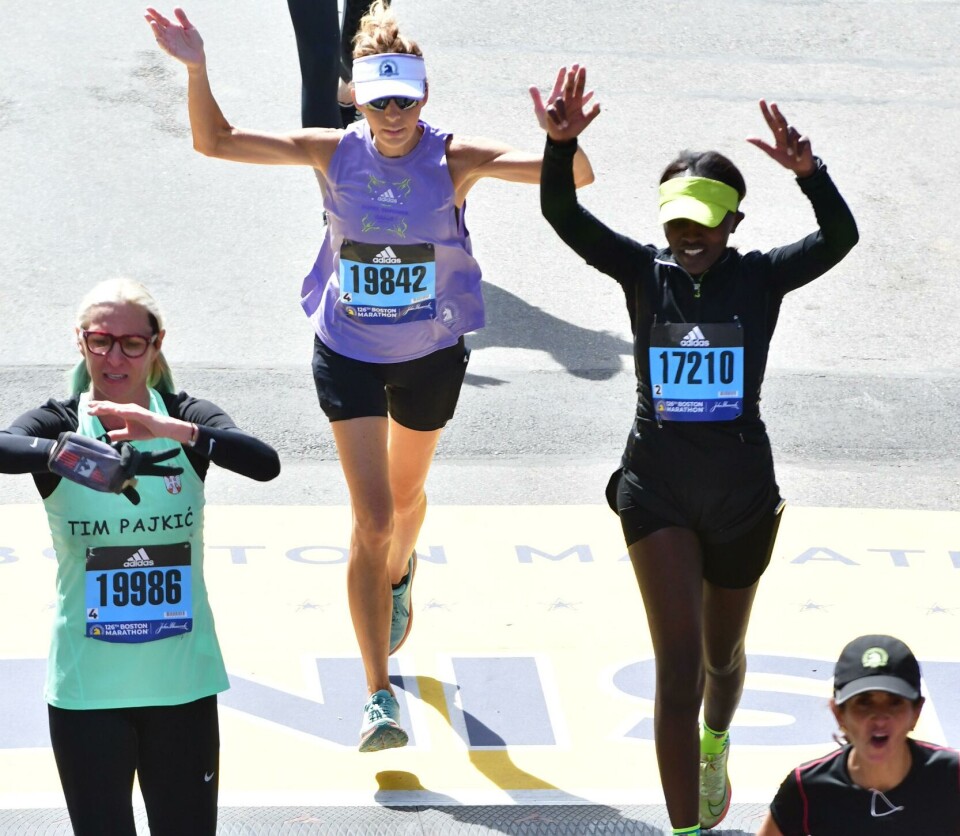
Emily Chepkor crosses the iconic blue and yellow finish line at the 2022 Boston Marathon.courtesy of Emily Chepkor
So back in Nairobi, I posted a simple invite on Instagram: ‘I’ll be standing somewhere at 8 a.m. If you want to run with someone, I’ll be there.’ That was October 1, 2022. Just three other women showed up. We ran a six-kilometer loop and ended with coffee at a café. That is what became We Run Nairobi.
From the start, I wanted the group to be free and open. Every running club I’d ever joined around the world had been free. That’s always been the easiest way to join a community. There are no barriers to entry. You get to hang out with dignity.
And it had to feel good, too. The post-run café stop mattered. The location mattered. It needed to be a place you’d actually want to spend your Saturday morning.
In those early days, it was simple. There were fewer than 40 people. We could sit around one table and knew each other by name. If someone didn’t show up, we knew why. Now it’s too big to have that kind of personal connection with everyone, but I hope it still exists in the smaller pockets. Sometimes I miss knowing everyone, but I’m proud of how the warmth still spreads.
I left my job as a lawyer in March to work on this full-time. I still hesitate to call it a job because we haven’t entirely defined what ‘this’ is. It sounds like I should know by now. But the truth is, most of my daily work is just feeling anxious about Saturday and the logistics that come with preparing for the runs: managing partnerships, dealing with finances, and learning to run operations on the fly. As we’ve grown, I’ve had to learn so many new skills. And sometimes, our financial runway is closing in. And I’m just like, ‘Right, I’ve got to figure out how this works.’ It’s a rollercoaster.
Yet, every Saturday, as soon as we start, every complaint I had during the week just disappears. It’s absolutely worth it. I’m the one people come to with their good news. Someone will show me their Strava or their latest time. I love that I’m still seen as the OG cheerleader. I am the first voice of encouragement someone heard, and the one they come back to when they’re proud.
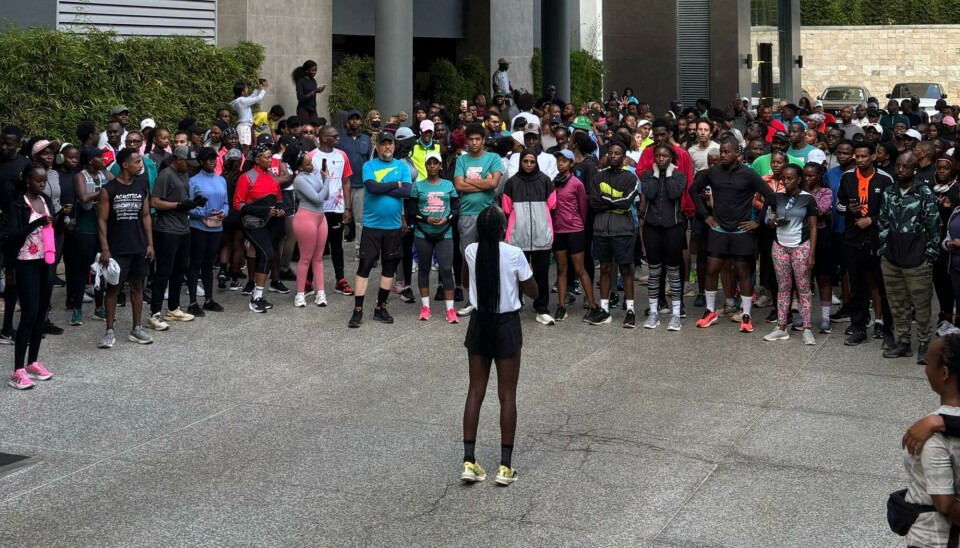
Emily Chepkor addresses the We Run Nairobi community before a Saturday morning run.courtesy of Emily Chepkor
For many of us, once you’ve conquered the Standard Chartered Marathon in Nairobi, your eyes immediately turn to the Kilimanjaro Marathon [in Tanzania]. It’s almost a rite of passage and a natural next step for ambitious runners. Kilimanjaro isn’t just about the race itself; it’s about the journey. We make it a road trip, sign up with friends, and ‘collect’ an international marathon under our belts. And once you’ve done that, there’s always another adventure — like the Rwenzori Marathon in Uganda — waiting on the horizon. That’s the beauty of this community: there’s always a new challenge to chase.
Even my social media has shifted. It used to reflect a more curated side of me. Like a ‘slay girl being pretty in Paris’... that kind of thing. Now it’s shifted toward fitness. It’s still me, just a different side. But I’ve come to understand that visibility has power.
I have one superstition: I don’t like to run the same race twice. I believe in the audacity of taking on a challenge for the first time and going in blind. But recently, I broke that rule. I was in a new relationship, and we decided to run the Nairobi Marathon again together.
My short-term dream is sustainability. If We Run Nairobi can reach a place where someone else handles business development, or someone else knows how to set up and run the events. I’d love to step back and just be in the running pack again.
My long-term dream? When someone googles ‘things to do in Nairobi,’ we show up as an option right after the National Park and the National Museum. I want We Run Nairobi to become a real stalwart of this city.
I love running. I like doing group runs. I like solo runs. I like runs in pitch darkness by myself. I love the whole thing. As long as it’s me with a community and we’re doing a thing together, it’s absolutely perfect.