



Advertisement
MUSIC
At the Gnaoua and World Music Festival, Musical Encounters Create Unprecedented Fusions
At this year’s 27th edition, African, Brazilian, and Indian traditions merged and complemented each other. Musicians from Morocco, Rwanda, Ethiopia, and Brazil share their experiences with the musical encounters.

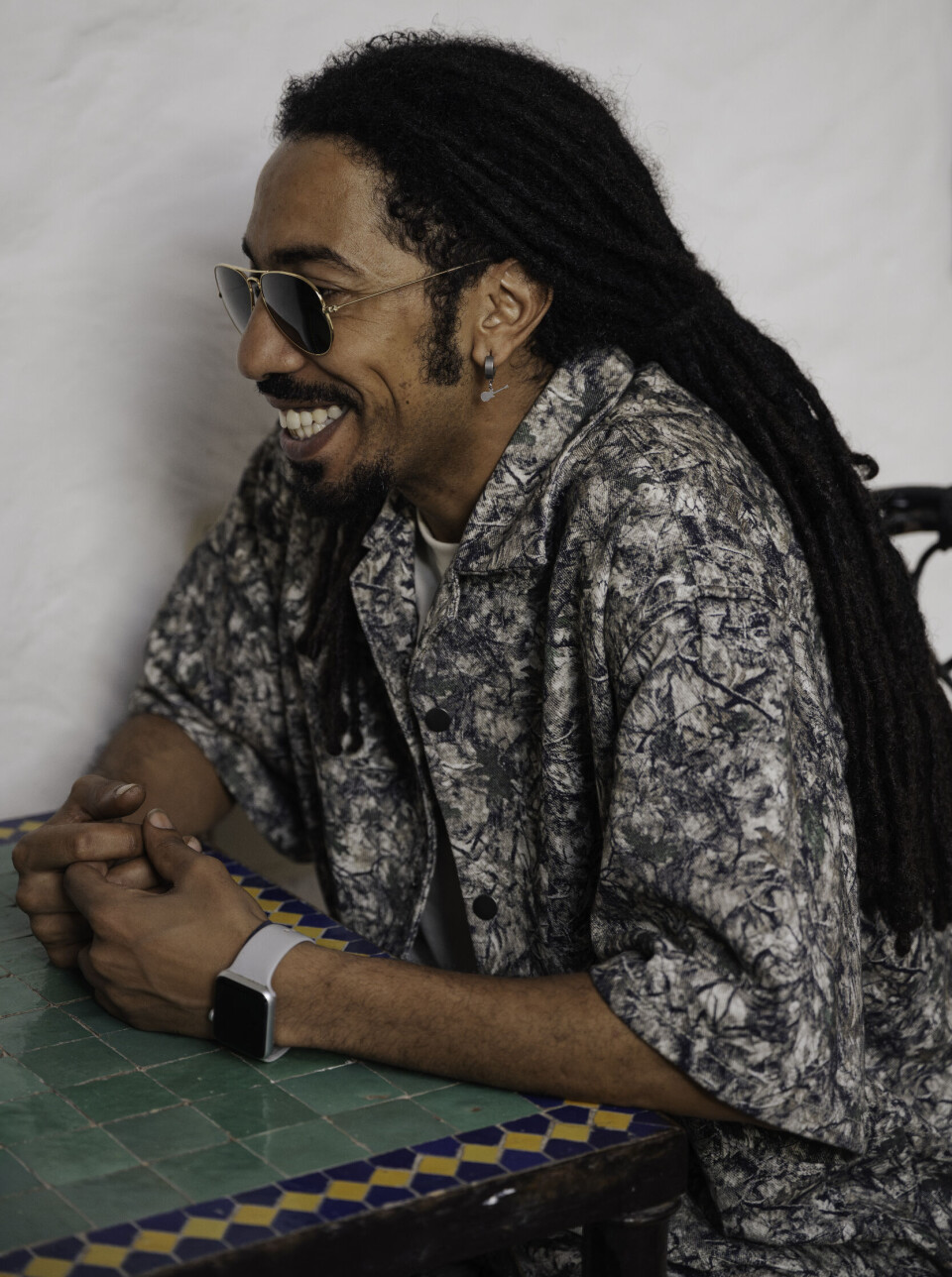
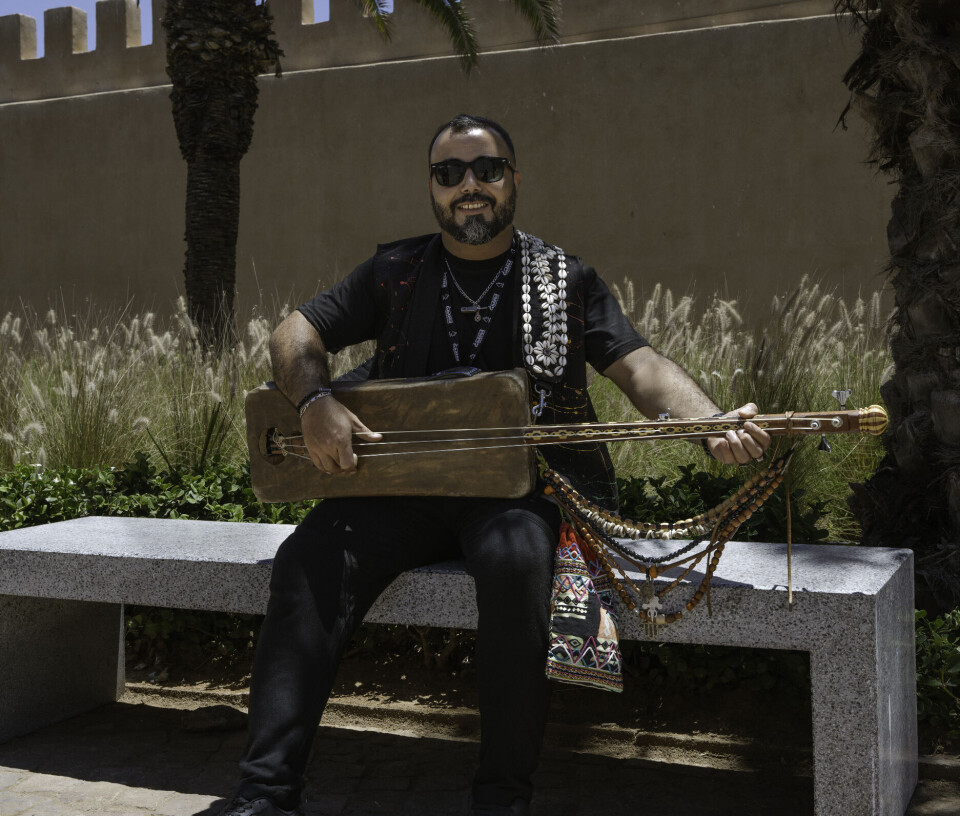
In a quiet corner of a 19th-century riad in Essaouira, Moroccan guembri specialist Mehdi Nassouli sits by a beautifully tiled table, reminiscing about a quarter century of attending the Gnaoua and World Music Festival. This year, Nassouli has the honor of being the festival’s opening act, a responsibility he does not take lightly.
“I’m a son of this festival,” Mehdi tells OkayAfrica with a big smile. “It’s usually opened by older maâlem (masters of Gnaoua), but this year, they trusted me to be the first young musician to open.” He laughs. “I’m 42, so not actually that young.”
Advertisement
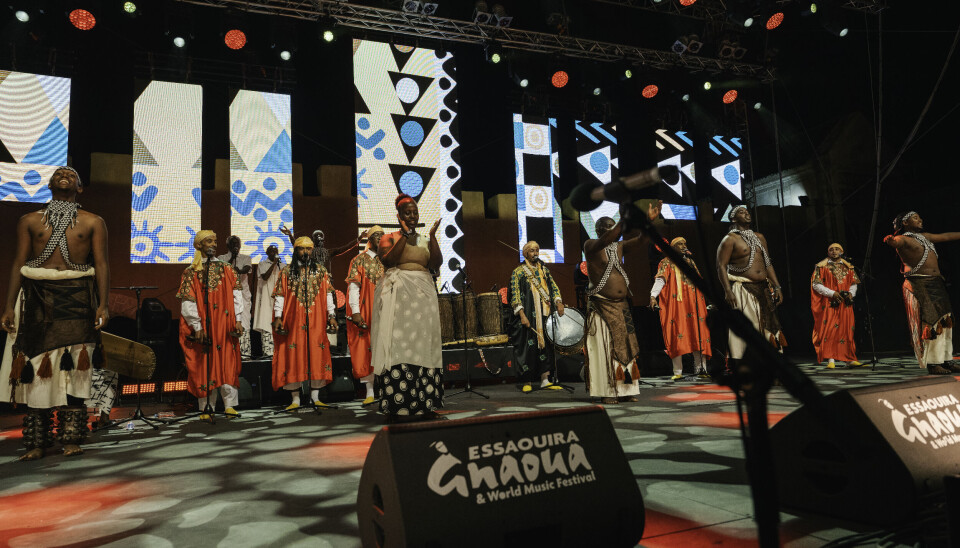
In the spirit of the festival, Nassouli’s concert is a fusion with Rwandan Itore dance troupe i Buhoro, Moroccan singer Sara Moullablad, Indian singer ganavya and French flute player Sylvain Barou. The group only had three days to meet and get familiar enough with each other to create a show fit for a world stage.
“It has been an incredible experience to collaborate, negotiate, and find common ground between art from Rwanda and Morocco,” says Mucyo w' Icyogere of Troupe i Buhoro, which preserves and performs Itore, a traditional Rwandan warrior dance. “The first day is always difficult, on the second day we see a window, and today [on the third day,] we fixed everything,” says Nassouli.
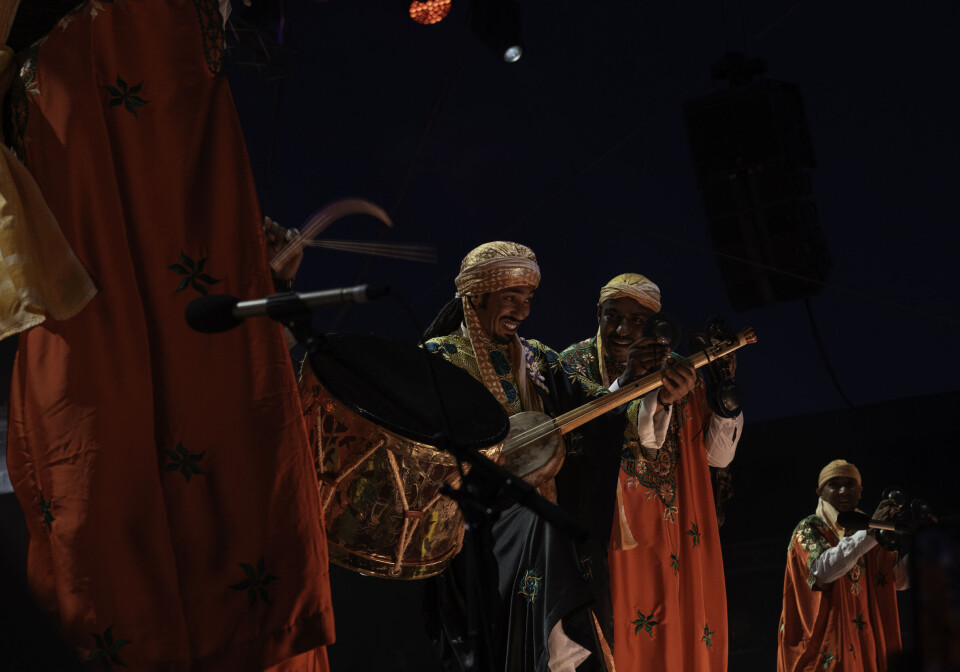
Their process began with listening for commonalities to get a sense of where rhythms and melodies can meet and complement each other. “Gnaoua music goes inside you; you feel it more than you hear it through your ears,” says Nassouli. “So it’s not easy to create an artistic show, because shows are mechanic with an intro and an outro.” Gnaoua music, instead, is a groove that is intuitive, not planned. Nassouli found that the Rwandan tradition was similar in some ways, despite its choreography.
“Moroccans know West African music well, but Rwanda is so far from us,” says Nassouli. “I’d say that 90% of Moroccans only know the movie Hotel Rwanda, but nothing about the music. It was surprising to hear their music, but when we started feeling it, we saw what we could do together.”
Discovering each other’s instruments, they realized that the traditions have many sonic commonalities. “The inanga [a multi-stringed trough zither] looks different to the guembri [a three-stringed, skin-covered bass lute], but it almost sounds the same,” says one of the Rwandan dancers. Similarly, the qraqeb (metal castanets) essential to Gnaoua music resemble the sound of metal on the Rwandan dancers’ belts. “The differences are visual, but the soul is the same,” she says.
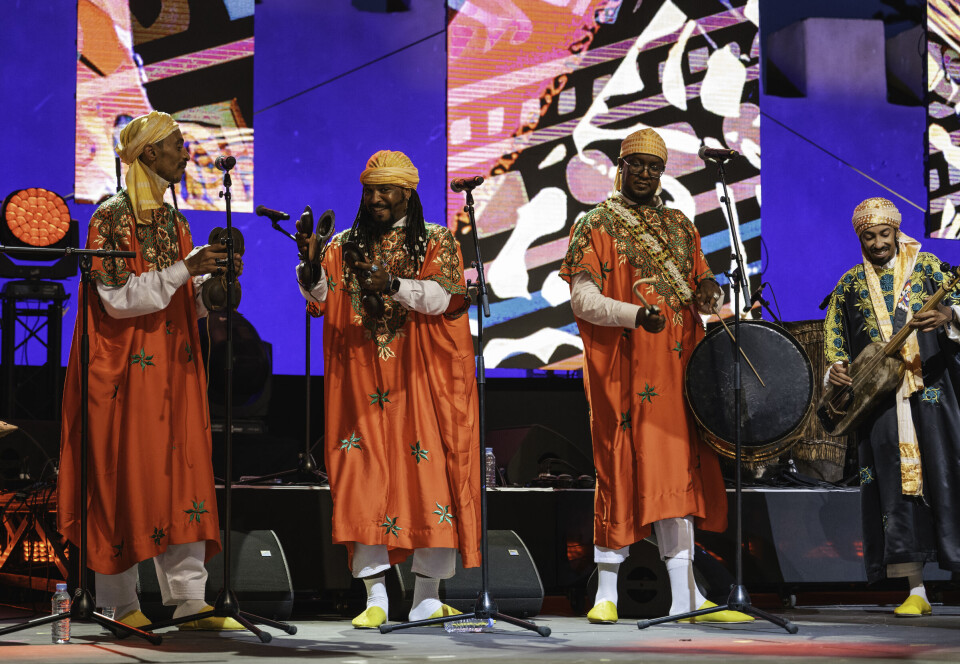
In the rehearsals, music bridged the geographic gap and language barrier between Rwanda and Morocco; even though some of the Rwandans cannot speak French, English, or Arabic, they connected with their Moroccan counterparts through rhythm. “Art is not entertainment; it’s a universal language,” says w' Icyogere.
Blending traditions does not come without risk. “Sometimes people think that they’re fusing, but it’s just one side imposing on the other side. Mutual respect is key for this process,” says w' Icyogere. “With the Gnaoua musicians, we met on the same wavelength. Each discovered the other and then found ways to craft magic. Identity was not a barrier.”
This is possible because each musician is aware of certain guidelines and practices that should not be changed. Knowing their art forms intimately, they intuitively understand which boundaries can be blurred and which essences need to be kept pure in order not to lose the core of their tradition.
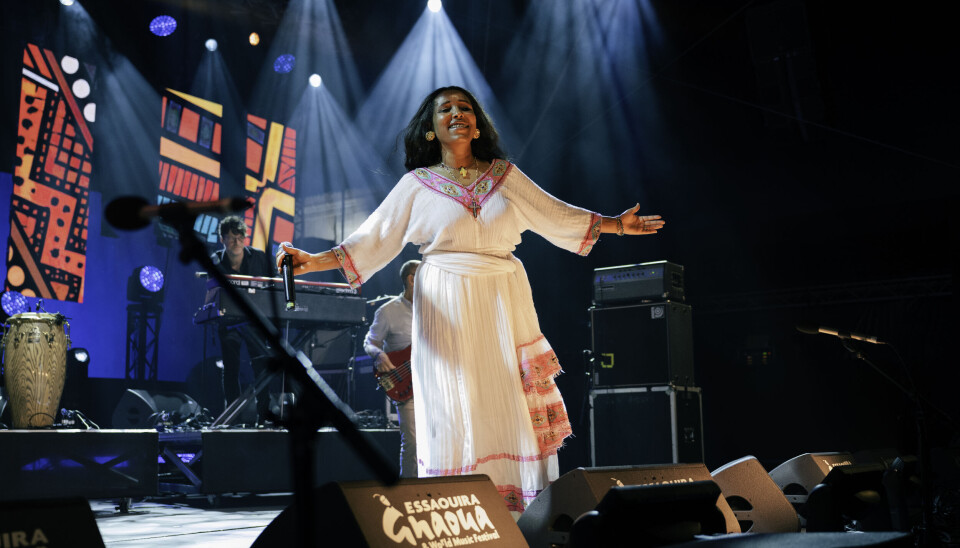
Elsewhere in the city, Maâlem Mohamed Montari encounters Ethiopian singer Selamnesh Zéméné and Badume’s Band for a similar rehearsal process. Zéméné descends from a long line of Azmaris, traditional entertainers and traveling minstrels in the Ethiopian Highlands. Similar to lilas, their music is played all night long; the masenqo (a single-stringed, bowed lute) resembles the guembri, and the singing invites the audience’s response and sometimes lulls them into a trance.
“It was a challenge to find a good way to bring our music together, but we found many similarities in the structure, like the 6/8 rhythm and how we both push the tempo and rhythm,” says one of the band members. “It’s wonderful; we definitely want to come back.”
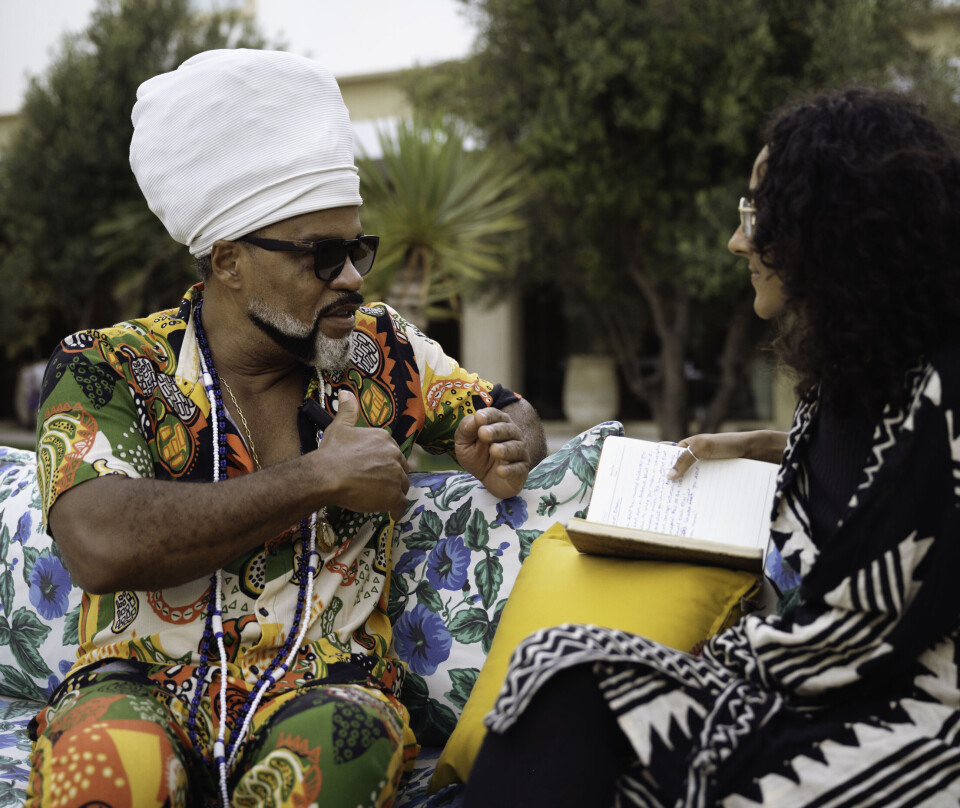
Legendary Brazilian singer and percussionist Carlinhos Brown is returning to Essaouira for the second time. Having previously performed at the festival in 2017, he collaborates with renowned Maâlem Hamid El Kasri to close out this year’s edition. Theirs is a fusion of Afro-Brazilian rhythms and Gnaoua, two repertoires that are deeply rooted in African heritage.
“After I returned to Brazil [in 2017], I practiced and learned more about Gnaoua,” says Brown. “The melodic system is different, but the rhythms are similar, and it’s so special to make a capoeira or maracatu song in a fusion with Gnaoua.” He demonstrates the rhythms, tapping a syncopated beat, beatboxing, and humming, making it sound like several musicians are playing at the same time. “They complement each other,” he says, echoing w' Icyogere.
Brown feels an emotional connection to the Gnaoua history of enslavement. “When I listen to Gnaoua, I feel hope and freedom in the melodies,” he says. “It’s mostly men singing the songs, but I hear mothers in the music. It’s spiritual.” El Kasri agrees that each musical encounter feels like “a benediction.”
These fusions are why the Gnaoua and Music Festival is the one-of-a-kind experience it is. Every musical encounter births a unique creation, held by the depth of the Gnaoua tradition. Maâlems of all ages participate in these collaborations, proving that tradition and open-mindedness are not mutually exclusive.
“If a culture is open, it can become universal,” says Nassouli. “Samba music used to be like Gnaoua, but today there are Samba schools all over the world. Gnaoua is the same: we need to be open to being inspired by other cultures so that our culture can become rich.”
“At this time of closed borders and political disagreements, we need to come together as musicians,” he continues. “With musicians I never think about borders–except when I have visa issues–because we all speak the same rhythm and that is a blessing.”