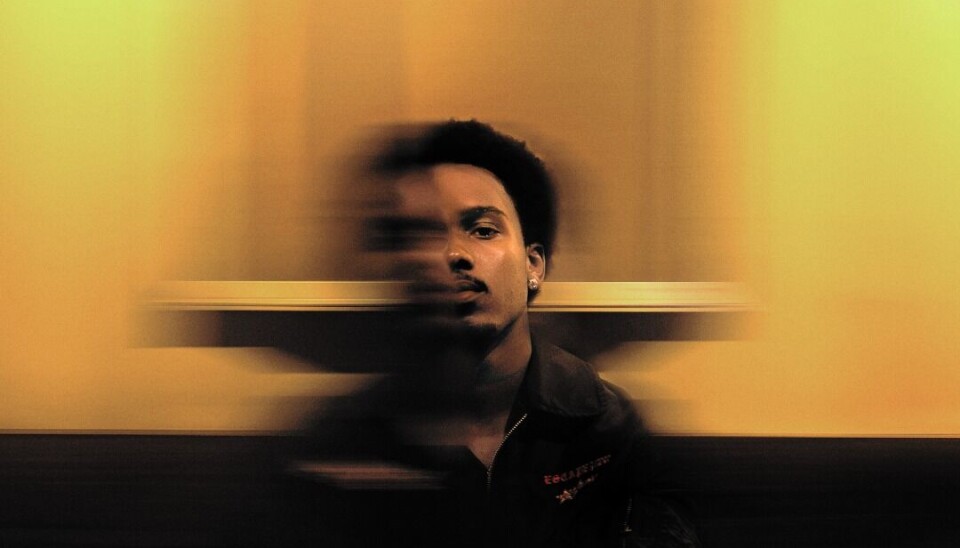
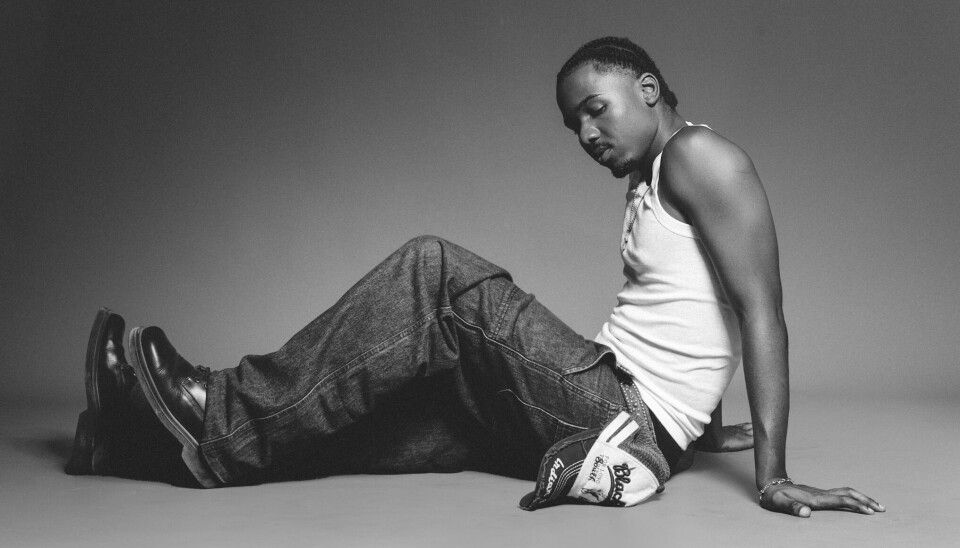
Itaré is part of a new generation of Tanzanian artists blending global influences with homegrown sounds.courtesy of Itaré
Itaré had just wrapped a round of exams for his cybersecurity program at university when he released his first EP in late November of 2025. One moment, the Tanzanian musician was grinding through end-of-term assessments. The next, reviewing promo materials and finalizing the mixing and mastering of his debut: the self-titled Itaré.
“It's a challenge,” he tells OkayAfrica. “But I'm managing it pretty well because it's important that I get my education.”
That balance between creativity and practicality feels essential for where he’s headed. With Tanzania’s musical mainstream shaped by the same heavyweight acts for decades, there’s growing momentum behind a new generation eager to define what comes next. Alongside Gen Z artists like Abigail Chams, Hevi, and Kontawa, Itaré is striving to build his name. What sets him apart is a sonic diversity that has been shaped by years of experiment…and it’s getting recognition.
Indeed, his new EP is the clearest sign yet of where he’s headed.
Born in Mwanza and raised in the Dar-es-Salaam neighborhood of Ilala, the 23-year-old has been building toward this moment for more than a decade. At 13, he was already making songs, shaped by a musical lineage that includes his grandfather and father, both of whom played instruments. His dad introduced him to Sade, Michael Jackson, and 1980s disco, music that still influences his taste today.
Like many young Tanzanian artists, Itaré’s earliest releases lived on SoundCloud. That period, he says, was key to learning how to create with limited resources.
“Those early years really taught me how to be resourceful,” he says. “I had this big laptop that made so much noise. I’d play the beat on it, and then use whatever smartphone I had to record. I’d sing the whole song from beginning to end. I didn’t have time to say, ‘Oh, I don't like this take.’ I just had to go all the way through.”
That DIY spirit stayed with him. “I don’t need the best equipment in the world to make a good song.”
Itare’s track “Where You Want,” featuring South Africa’s Kane Keid and Tanzania’s Joh Makini, made OkayAfrica’s Best East African Songs of 2025, and he was named one of our artists to watch in 2026.courtesy of Itaré
Back then, he was honing his skills to become a rapper. He was drawn to the energy and rebellion in hip-hop, and artists like J. Cole who made storytelling feel accessible. “I could understand what he was saying, so it made it easier for me to imitate.”
But melody eventually won him over. He learned to play the guitar from his father, then continued to develop his skills on his own. He trained his voice by recording and playing it back until it started to work. By the time he began crafting what would become his debut, he had already amassed hundreds of tracks.
“At least 200, maybe 200 plus,” he says. “That’s just what’s in my phone. I don’t know what studios and laptops have.”
The Itaré EP is just seven songs, but it confidently moves through genres as if he were already a fully formed artist. And according to him, it was just a sampling of what he can do.
“I wish I could have all my supporters in the studio just to play everything I’ve made,” he says. “We could have a little party, but I just feel like this project had to show the range.”
From the smooth bounce of “Pretty Girl,” produced by longtime collaborator Sign Beatz, to the amapiano-leaning “Milele” with South Africa’s Tshego, each track was chosen to show a different side of his sound.
A Measured Approach to a New Era
The Itaré EP, with its cover art seen here, is just seven songs. But it confidently moves through genres as if he were already a fully formed artist.courtesy of Itaré
Part of that range comes from the features on the EP. Itaré teamed up with artists from Tanzania’s Joh Makini, Nigeria’s WurlD, South Africa’s Kane Keid and Tshego, and India’s Remee. His collaboration on the song “Whine” with WurlD stands out. “That’s one of my favorite songs on the EP. I love that song,’ he says. ‘It just fit him specifically… It’s so seamless… he really comes through with those vocals, just going crazy.”
His dream collaboration would be with Wizkid. The Nigerian artist first inspired Itaré to embrace African music after years of listening to rap. But Itaré also knows that great features take time, and every song has to feel intentional. “Like with Tshego, when he got the track [‘Milele’], he said he’d been looking to get on something with that sound,” he says. “The timing was perfect.”
Even with its variety, the EP is still measured, Itaré reveals. He chose to hold back on more experimental tracks to build trust.“I think my mind goes way bolder than what’s on this project. But I didn’t want to go all the way left just yet. I wanted it to be digestible, especially for someone hearing me for the first time, especially from Tanzania.”
For Itaré, holding back wasn’t about fear. He wanted to build trust and attune the ear of the Tanzanian listener.
“Tanzanian music has been a certain way for so long,” he says. “So with this project, I just wanted to bring people into a different world slowly. Not everything all at once.”
I wanted it to be digestible, especially for someone hearing me for the first time,” Itare says of his EP. “Especially from Tanzania.”courtesy of Itaré
That approach is intentional. Itaré sees his generation as uniquely positioned. Raised on the internet, young Tanzanian artists grew up consuming music from all over the world, often at the same time. “We were listening to artists on SoundCloud while also listening to music from the West and from Africa. That exposure is why there’s so much experimentation and diversity right now.”
He adds, “What my generation is doing is creating space for new sounds to grow. We’ve had exposure to different genres, different cultures, and that’s shaping how we make music. My job now is to take some of those risks, so the next artist after me can go even further.”
That vision also means letting go of old rules, including the idea of gatekeepers.
“I just feel like it doesn’t make sense,” he says. “Music evolves. There’s always going to be new artists coming through with new sounds. So it’s important that the people who came before us support that.”
He believes that the responsibility to make room for the next generation is shared across the entire ecosystem, from established artists to media. “We’re the ones who are going to dictate what the sound is going to be for the next couple of years,” he says. “That support really matters.”