As the Ghanaian rapper sets out on his first U.S tour, he reflects on the journey that has brought him here, the making of his latest album ‘Redemption Valley,’ and learning to be more vulnerable.
Nelson C.J.NelsonC.J.Lagos-Based West Africa Correspondent
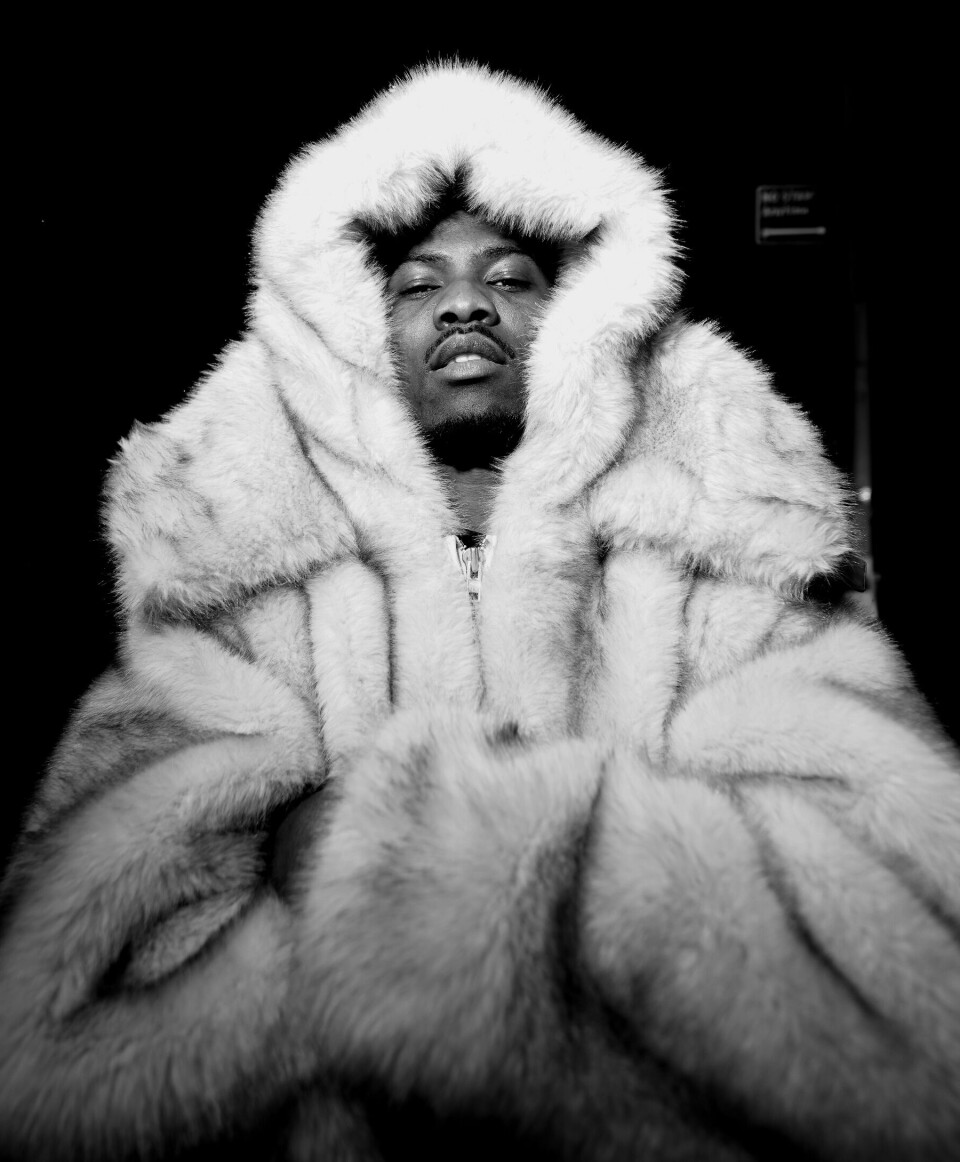
“I'm looking forward to meeting my fans in person and performing new music for them”courtesy of Kwesi Arthur
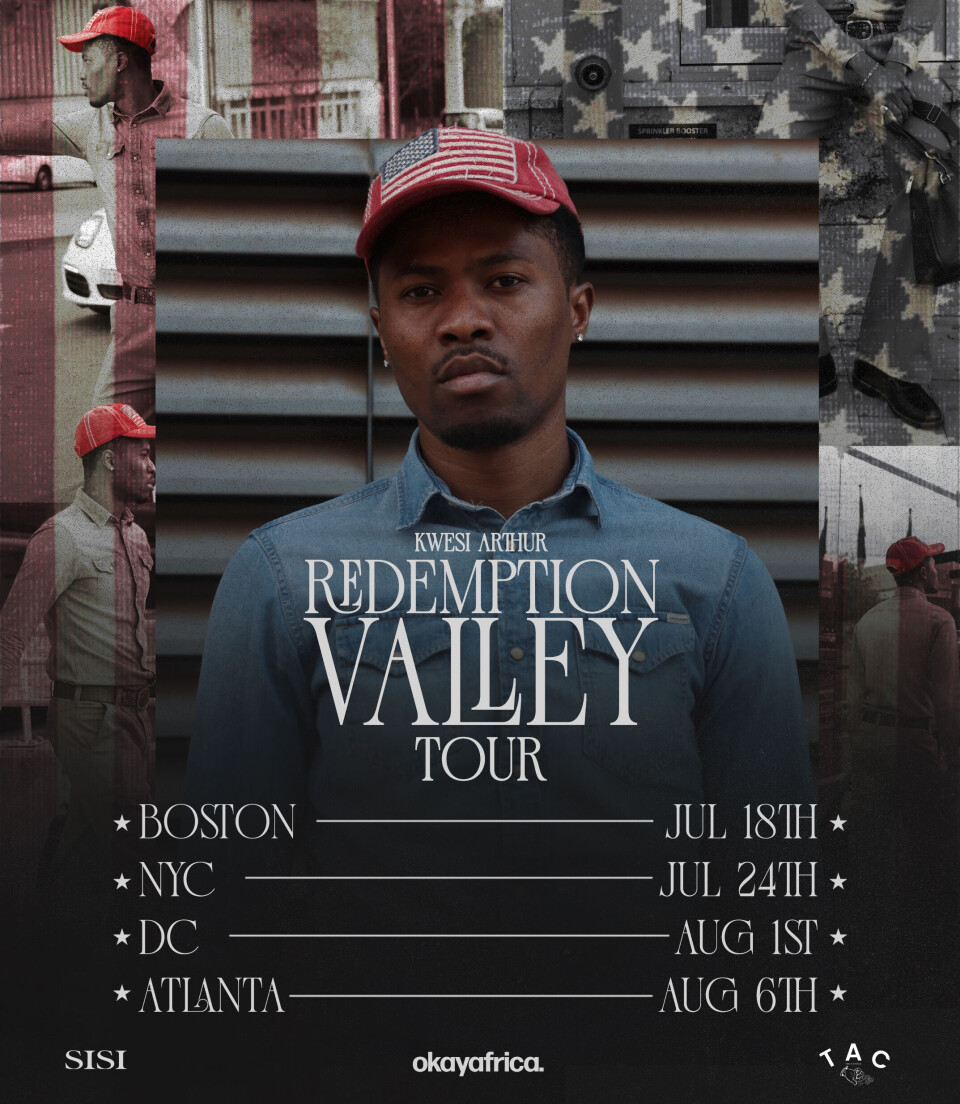
When Ghanaian rapper Kwesi Arthurofficially launches his tour this Saturday, it will be his first time embarking on a multi-city tour in the United States as an independent artist. But that isn’t top of mind for him right now. At the moment, Arthur is entirely focused on the experience he cannot wait to give his fans at his shows.
“I'm looking forward to meeting my fans in person and performing new music for them,” Arthur tells OkayAfrica a few weeks ahead of the tour. Arthur is particularly looking forward to “Taking them into the world of Redemption Valley for the first time, so we've been, um, rehearsing a lot, like we've been going over the songs with the band multiple times to make it a night to remember and just working on stuff on the back end to get things done.”
The Tema-born rapper tells me this over a virtual call. His voice is restful yet upbeat, as if acknowledging the scale of the joyride they’re about to embark on.
Arthur (born Emmanuel Kwesi Danso Arthur) is entering a significant phase of his life, one underpinned by varying levels of reinvention. In February, he released Redemption Valley, an aggressively honest and cathartic project where Arthur lays out the struggles, complexities, battles, and challenges he has held inside for a while now. It’s a stellar, gently paced work that bristles with honesty and affirms Arthur’s role as an important voice in Ghanaian hip-hop and rap.
With his last full-length project, Son Of Jacob, released in 2022, Arthur emerged from a surprising hiatus that erupted into a very public and very ugly fight with his former label and management, Ground Up Chale. In Redemption Valley, Arthur doesn’t marinate in the ongoing conflict; he refuses to let it define him and instead shifts his focus to a broader story of self-determination.
“I've been through a lot these past couple of years, you know, in terms of realizing who I am and how far I've come. At some point, I was trying to cater to the people who knew me and still try to be relatable to them, and I believe me doing that was kind of reducing myself and playing small,” Arthur explains. “But I'm glad I can embrace who I am right now, and everything I have done and everything I continue to do is just live in the moment. I can't be fully or truly loved if I'm not living fully. Do you get me? If I'm hiding parts of myself or I'm not living up to parts of myself.”
“Immigrant” is Arthur coming to terms with the kind of change that extends a dubious hand.”courtesy of Kwesi Arthur
And true to his words, much of Redemption Valley is Arthur inviting listeners to look beyond any preconceived image of him into the gritty and unburnished truth of his humanity. On “Redemption” and “I Be Where I Wanted To Be,” he talks about his upbringing and the disorienting difficulties of life on the streets. In “Yawa (Hosanna),” he talks about spirituality, healing, and expectations that feel Herculean. And in “Immigrant,” he paints a poignant portrait of a man surrendering to a life that forces him to be born anew. Free of the fluff and pomp of his celebrity status, “Immigrant” is Arthur coming to terms with the kind of change that extends a dubious hand, offering you a chance to rewrite your story while taking away a certain autonomy and self-definition that was once present.
“I recorded that song somewhere in 2022. I was staying in Atlanta at that time and I believe that being somewhere where you are not really recognized where I was allowed to just be who I was again before the limelight and before I couldn't do normal things in my place of birth allowed me to take a backseat and see everything that's that has unfolded in my life and it's unfolding up until that moment.” He says.
For Arthur, performing these songs has proven therapeutic for the experiences that gave rise to them.
“Every time I perform these songs, even at rehearsal, it takes me back to the state I was in when I made these songs,” he says.
“I get to experience these lyrics again. I believe in making these songs. It was me expressing myself and how I felt in those moments. It's definitely my hope that people can relate to whatever I say. But I believe first off it's a freeing thing for me to let these things out and to liberate myself first, which helps my healing journey and my journey through life, you know.”
On Independence
A big part of Arthur’s current era is his newfound independence. It can be a precarious place to be for an African artist, and, as the man himself puts it, “it’s a double-edged sword”.
“Sometimes it's fun, sometimes it's difficult, but I believe in finding some form of balance within all this. I'm an artist, and most times I just want to create music, but I've come to realize also that just me being an artist and creating is not only about creating music. Creating a show is also artistry; creating a video is also like artistry. And I can express my artistry in different forms, but if I said it was easy, I would be lying.” He admits. But it’s also a fun experience, and for Arthur, presenting his artistry on his own terms presents an opportunity for autonomy he’s never had.”
“Sometimes it's fun, sometimes it's difficult.”courtesy of Kwesi Arthur
“The first song I made off of this project was Immigrant. I recorded that song somewhere in 2022. I don't remember the exact month or day at this moment, but it was when I had started staying in America more, like I was spending more time here than usual. So I just thought that I noticed certain things about this country and being a foreigner, basically.”
In this journey, risks, creatively and logistically, are more likely, and often turn up surprising results.
“I put it out in a very unorthodox way - on a platform where the fans get to buy it first before it goes on streaming, which is very out of the box for somebody from our side of the world, but the growth of this was massive and insane,” he says. “It did so well in Ghana, in the UK, in the US that I believe a lot of people in the African diaspora especially gravitate towards it because I believe they resonate with a lot of the messages on there.”
So, as he opens his first show in Boston this Saturday, July 18th, Arthur is ready to let himself be seen and, in turn, offer his attendees a chance to see themselves as well.