NEWS

Today in Africa — April 15, 2026: 1,096 Days of War in Sudan: A Proxy Conflict Driving the World’s Worst Humanitarian Crisis

OkayAfrica has scoured the Internet for today’s major news stories, so you don't have to. On April 15, coverage includes: Sudan’s war entering its fourth year as a devastating proxy conflict, deepening famine, displacement, and a worsening humanitarian crisis with no end in sight; and more.

Sudanese people and supporters protest the ongoing war and ethnic cleansing in Sudan during a rally organized in Utrecht, The Netherlands.
Sudanese people and supporters protest the ongoing war in Sudan, now entering its fourth year, during a rally organized in Utrecht, The Netherlands.

Every day, OkayAfrica shares a roundup of news we’re following but haven’t published as full articles. These short updates cover what’s happening on the continent — in culture, politics, and beyond. For more on stories like these, be sure to check out our News page, with stories from across the regions.

Three Years On, Sudan’s War Has Become a Humanitarian Catastrophe With No End in Sight

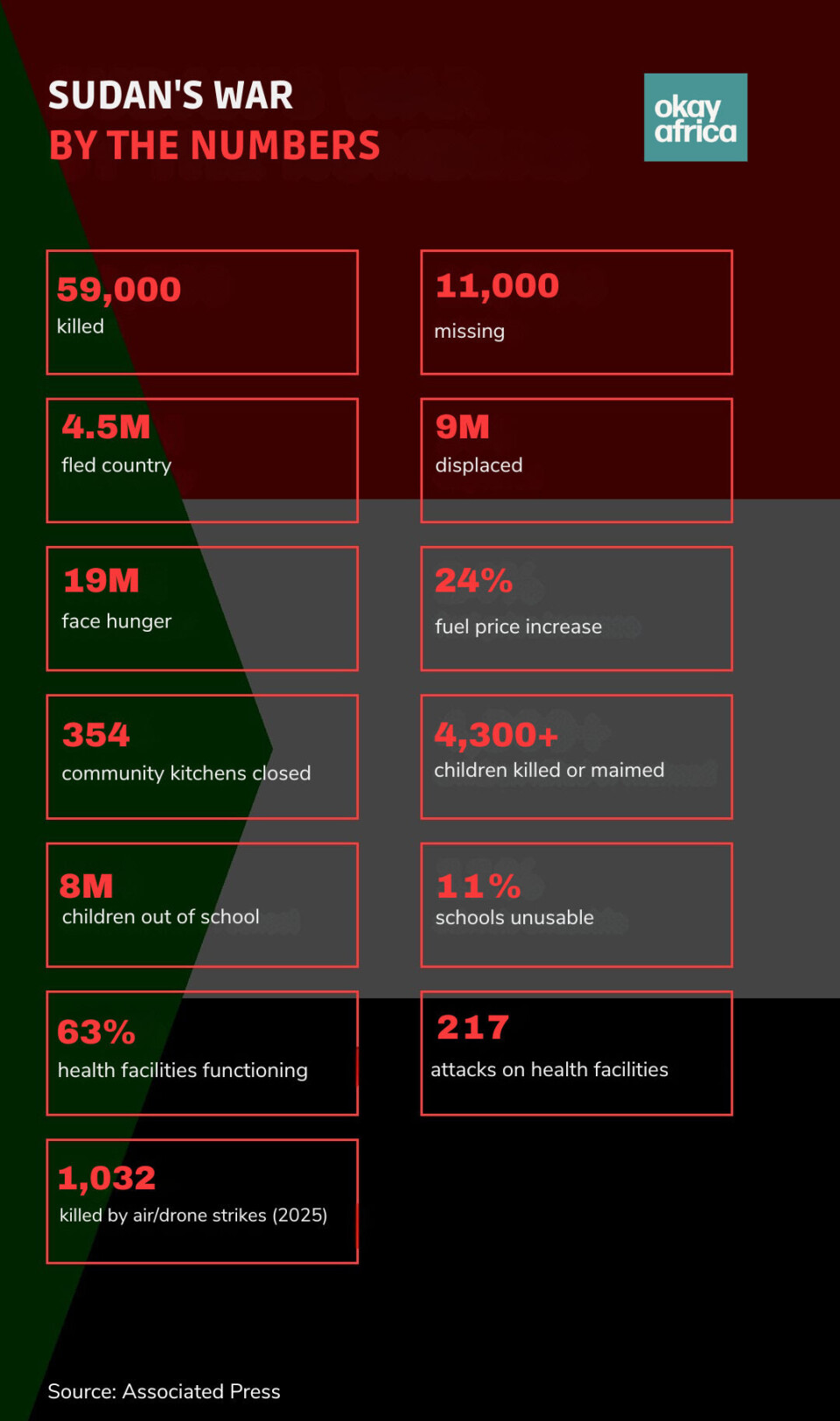
An infographic of Sudan's war by the numbers.
Three years on, tens of thousands have been killed, millions have fled, been displaced, and face severe hunger. This is the cost of the war in Sudan.

Today, Wednesday, April 15, marks three years since fighting broke out between Sudan’s military and the Rapid Support Forces. The conflict has spiraled into what aid groups call the world’s worst humanitarian crisis. The war has killed tens of thousands, displaced millions, and pushed large parts of the country into famine, with nearly two-thirds of the population now in need of assistance as violence continues with no clear path to peace.

What began as a power struggle after Sudan’s failed transition to civilian rule has fractured the country and hardened rival zones of control, with the military holding key cities and the RSF entrenched in Darfur and parts of Kordofan. Diplomatic efforts have repeatedly failed, and even as global powers gather to push for aid and a ceasefire, both sides remain locked in a brutal conflict that risks spilling beyond Sudan’s borders.

What we know:

  • The war grew out of tensions between Gen. Abdel Fattah al-Burhan and RSF commander Mohamed Hamdan Dagalo after the 2019 uprising that ousted Omar al-Bashir

  • The conflict is a proxy war, not a civil war, with civilians caught in the middle rather than fighting each other

  • Sudan is now effectively split between a military-backed government in Khartoum and an RSF-aligned administration in Darfur

  • Regional powers are accused of backing both sides, including Egypt’s support for the military and allegations of UAE support for the RSF

  • Sudan has taken the UAE to the International Court of Justice over alleged involvement in genocide, but the case was dismissed on jurisdiction grounds

  • Control of Sudan’s gold trade is a key factor — about 97% of exports from military-held areas went to the UAE in 2024

  • Sudan’s Red Sea location has made it strategically important to regional powers competing for influence

  • Hospitals, aid routes, and civilian infrastructure have been repeatedly targeted, worsening access to care and relief

International pressure is mounting for a ceasefire, but both sides have rejected talks and did not attend the

latest Berlin conference

Watch OkayAfrica’s video for a powerful look at the human toll of Sudan’s war, three years on:

In Brief: More Stories Today

Nigeria Orders Probe Into Deadly Market Airstrike

Nigeria has ordered a full independent investigation into a military airstrike on a market in Jilli that left at least 200 people feared dead, even as officials defend the strike as targeting militant positions. The government says the operation hit a known Boko Haram and ISWAP logistics hub, highlighting the risks civilians face in contested areas where insurgents operate alongside everyday activity.

DR Congo to Receive Dozens of U.S. Deportees in New Deal

The Democratic Republic of Congo is set to receive more than 30 deportees from the U.S. this week under a new third-country agreement, with arrivals expected near Kinshasa. The move, involving migrants from outside Congo, has drawn criticism from rights groups and raises questions about what happens after a short stay in a hotel.

Tanzania Questions Partner After U.S. Influencer’s Death in Zanzibar

Tanzanian police are questioning the fiancé of U.S. influencer Ashly Robinson after she died following an alleged suicide at a Zanzibar hotel. Authorities say the couple had reported domestic conflicts, and investigations are ongoing pending medical and forensic results.

Togo Pushes to Replace Mercator Map With Africa-Centered Projection

Togo is leading a push for the United Nations to adopt a world map that better reflects Africa’s true size, challenging the long-used Mercator projection. Backed by the African Union, the campaign argues that current maps distort global perceptions by shrinking Africa and exaggerating the size of regions near the poles.

South Africa Names Roelf Meyer as U.S. Ambassador

South Africa has appointed veteran negotiator Roelf Meyer as its new ambassador to the U.S., filling a post that had been vacant since Ebrahim Rasool was expelled last year. Meyer played a key role in talks that ended apartheid and is expected to handle complex tensions between Pretoria and Washington.

Pope Visit Sparks Hope for Peace in Cameroon’s Conflict Zones

Separatists in Cameroon’s Anglophone regions have announced a temporary ceasefire to allow safe travel during Pope Leo XIV’s visit, as civilians hope it could open space for dialogue. The visit comes amid years of violence that have killed thousands and displaced communities, with some warning it could be used to mask deeper political tensions.

Nigeria Becomes Net Petrol Exporter for First Time in Decades

Nigeria has become a net exporter of petrol for the first time, driven by rising output from the Dangote refinery that has sharply reduced imports. The shift could boost foreign exchange earnings, strengthen the naira, and reshape fuel trade across Africa as exports reach new markets.

South Africa Returns Stolen Remains and Artifact to Zimbabwe

South Africa has handed back ancestral human remains and a historic Zimbabwe bird artifact taken during colonial rule, marking a step toward restitution. Officials say the return will allow proper burial and restore a key national symbol, closing a painful chapter that dates back more than a century.